
Facets
Browse across eight MeSH (opens in new tab) facets — era, geography, science, specialty, technology, history, culture, and reference. Select one tag per group; counts update across the others.
Clear filtersFacet filters
Geography
Specialties & Disease
- Anatomy & Pathology 0
- Cardiology & Blood 0
- Neurology & Psychiatry 0
- Obstetrics & Reproductive 0
- Infectious Disease (General) 0
- Surgery & Anesthesia 0
- Public Health 1
- Immunology & Dermatology 0
- General Clinical Medicine 1
- Military Medicine 0
- Psychology 0
- Alternative & Fringe Medicine 3
- Pediatrics 0
- Ophthalmology & Vision 0
- ENT & Hearing 0
- Urology & Nephrology 0
- Gastroenterology & Hepatology 0
- Pulmonary & Respiratory 0
- Rheumatology, Rehab & Pain 0
- Internal, Emergency & Geriatric 0
- Veterinary Medicine 0
- Epidemiology & Demography 1
- Physiology & Embryology 0
- Dentistry 0
- Plagues & Epidemics 0
- Microbiology & Virology 0
Social & Historical Studies
Institutions & Culture
Reference & Scholarly Works
Drugs & Technology
15 entries match United States [Z01.058] · Professions & Education [M01 / N02] · Race, Ethnicity & Colonial Medicine [K01.900.850]
2015 CE
#10275
A Cree healer and his medicine bundle: Revelations of indigenous wisdom: Healing plants, practices, and stories.
"With the rise of urban living and the digital age, many North American healers are recognizing that traditional medicinal knowledge must be recorded before being lost with its elders. A Cree Healer and His Medicine B…
2015 CE
#10341
Beyond germs: Native depopulation in North America. Edited by Catherine M. Cameron, Paul Kelton, and Alan C. Swedlund.
This book "challenges the “virgin soil” hypothesis that was used for decades to explain the decimation of the indigenous people of North America. This hypothesis argues that the massive depopulation of the…
1840 CE
#8828
Catalogue of skulls of man, and the inferior animals, in the collection of Samuel George Morton.
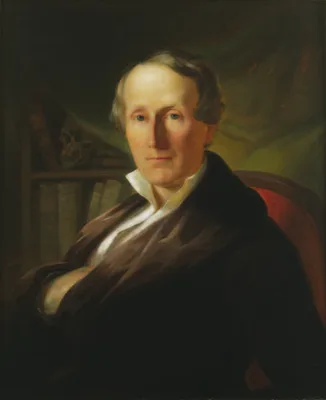
Numbers 901-929 in Morton's catalogue are "Thirty Skulls of genuine unmixed NEGROES born in Africa. This interesting series series was collected by Don José Rodriguez Cisnerso, M. D. of Havana, in the island of…
2008 CE
#12097
Creek Indian medicine ways. The enduring power of Muskoke religion.

"Called the Mvskoke in their language, the Creek Indians of Oklahoma continue to practice traditional medicine. In Creek Indian Medicine Ways, David Lewis, a full-blood Mvskoke and practicing medicine man, tells about…
1983 CE
#8082
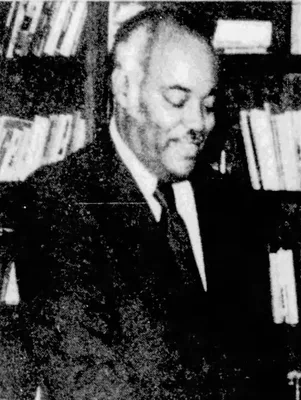
Educating black doctors: A history of Meharry Medical College.
2009 CE
#12095
Forgotten voices: Death records of the Yakama, 1888-1964.
"Despite a recent resurgence in studies of death and disease in native peoples of the Western Hemisphere, little work has been done on death and disease in Native Americans during the reservation period of the late 19…
1823 CE
#8798
Manners and customs of several Indian tribes located west of the Mississippi; including some account of the soil, climate, and vegetable productions, and the Indian materia medica: to which is prefixed the history of the author's life during a residence of several years among them.
Hunter claimed that as a child he had been captured by the Cherokee before they came to Texas. He adopted the name of an English benefactor, John Dunn, and later added the name "Hunter" given by the Indians because of…
1908 CE
#6455.1
Physiological and medical observations among the Indians of Southwestern United States and Northern Mexico.
Digital facsimile from the Internet Archive at this link.
2007 CE
#10371
Race & medicine in nineteenth and early twentieth-century America.
1994 CE
#10090
Secret doctors: Ethnomedicine of African Americans.
"Based on an ethnographic study of the traditional medicine of African Americans in the rural southern United States, this work concentrates on the original Louisiana Territory, with its Native and African American in…
2021 CE
#13271
Strong hearts and healing hands: Southern California Indians and field nurses, 1920-1950.
1900 CE
#9475
The ethno-botany of the Coahuilla Indians.
"The ʔívil̃uqaletem (or Ivilyuqaletem) are Native Americans of the inland areas of southern California.[2] Their original territory included an area of about 2,400 square miles (6,200 km2). The traditional Cahu…
1994 CE
#10084
The health of Native Americans: Towards a biocultural epidemiology.
1775 CE
#7505
The history of the American Indians; particularly those nations adjoining to the Missisippi [sic] East and West Florida, Georgia, South and North Carolina, and Virginia: containing an account of their origin, language, manners, religious and civil customs, laws, form of government, punishments, conduct in war and domestic life, their habits, diet, agriculture, manufactures, diseases and method of cure... With observations on former historians, the conduct of our colony governors, superintendents, missionaries, & c. Also an appendix, containing a description of the Floridas, and the Missisippi [sic] lands, with their productions--the benefits of colonizing Georgiana, and civilizing the Indians--and the way to make all the colonies more valuable to the mother country....
The author characterized himself on the title page as "a Trader with the Indians and a Resident in their Country for Forty Years." Digital facsimile from the Internet Archive at this link.
1892 CE
#6452.1
The medicine-men of the Apache.
Bourke, a U.S. Army officer with experience on the American Indian frontier, was a pioneer student of native American medicine and anthropology. Digital facsimile from the Internet Archive at this link.