
Notice sur des ossements humains fossiles, trouvés dans une caverne du Brésil.
Publication Details
Société royale des antiquaires du nord. Mémoires ....1845-1847, 49-77.. 1847 CE.
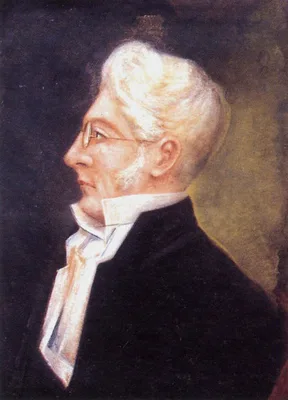
Lund, a student of Cuvier, excavated extensively in the region of Lagoa Santa, an area rich in caves and karst formations comprising the northern part of Greater Belo Horizonte in Brazil. Between 1835 and 1843 he collected, classified and studied more than 20,000 bones of extinct species, such as mastodons and ground sloths, and was the first to describe dozens of species, among them the Saber-tooth cat (Smilodon populator). In 1843 Lund discovered fossilized skulls and bones of 30 humans deep in a flooded cave, intermixed with the remains of extinct species. These were the first documented remains of fossil humans discovered by a trained paleontologist in South America, or anywhere in the Western Hemisphere.Since these individuals were found among the remains of long-extinct species, this finding led Lund to realize that humans and the prehistoric animals had co-existed, something which was in frontal opposition to Cuvier's catastrophic theory.
Lund's first summary of his research appeared in the C.R. Acad. Sci. (Paris) 20 (1845) 1368-1370 as "Sur l'antiquité de la race américaine, et sur les rapports qu'on peut lui supposer avec les races de l'ancien monde." This was a letter from Lund to Elie de Beaumont that Beaumont read to the Académie.
Browse Tags
Thematic Classifications
| Catalog Metadata | Reference Information |
|---|---|
| Entry Number | #7305 |
| Permanent Link | https://staging.historyofmedicine.com/entry/9475 |
| Author Bio Link | Wikipedia ↗ |
| External URL | notice-sur-des-ossements-humains-fossiles-trouvs-dans-une-caverne-du-brsil |
Geographic Context
Mentioned in annotation: Paris