
Reliquiae diluvianae; or, observations on the organic remains contained in caves, fissures, and diluvial gravel, and on other geological phenomena, attesting the action of an universal deluge.
Publication Details
London: John Murray, 1823 CE.
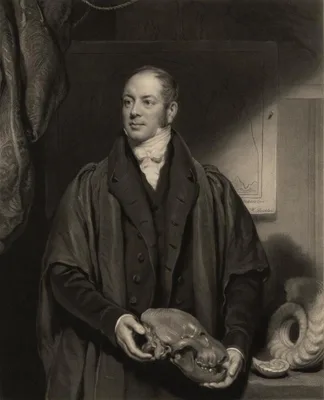
Buckland’s elaborately illustrated Reliquiae diluvianae (Relics of the Flood) describes his geological and paleontological researches of the early 1820s, including his investigations of the Kirkdale and Paviland caves in Great Britain. His excavation of the Paviland Cave (Goat’s Hole) in Wales is notable for his discovery of a partial human skeleton covered in red ochre and accompanied by mammoth fossils and some bone and ivory ornaments. This find, which became known as the "Red Lady of Paviland," was later recognized as the first discovery of modern human fossil remains found in Europe. However, despite the proximity of the headless skeleton to the fossils of an extinct animal, Buckland identified the human remains as “anterior to, or coeval with, the Roman invasion of this country” (p. 92). This was in part due to his allegiance to catastrophist thought, as propounded by Cuvier, which held that human beings had not appeared on earth until after “geological deluge.”
Thematic Classifications
| Catalog Metadata | Reference Information |
|---|---|
| Entry Number | #7254 |
| Permanent Link | https://staging.historyofmedicine.com/entry/9423 |
| Author Bio Link | Wikipedia ↗ |
| External URL | reliquiae-diluvianae-or-observations-on-the-organic-remains-contained-in-caves-fissures-and-diluvial-gravel-and-on-other-geological-phenomena-attesting-the-action-of-an-universal-deluge |
Geographic Context
Publication place: London