
Ueber ein Contagium vivum fluidum als Ursache der Fleckenkrankheit der Tabaksblätter.
Publication Details
Verh. k. Acad. Wet. Amst., 65 (2), 3-21. 1898 CE.
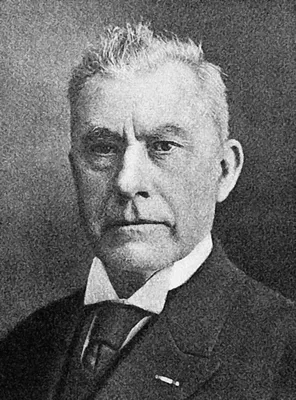
Beijerinck confirmed the findings of Ivanovski. He showed that the tobacco mosaic virus would diffuse through agar. "Like Ivanovsky before him and Adolf Mayer, predecessor at Wageningen, Beijerinck could not culture the filterable infectious agent; however, he concluded that the agent can replicate and multiply in living plants. He named the new pathogen virus to indicate its non-bacterial nature. Beijerinck asserted that the virus was somewhat liquid in nature, calling it "contagium vivum fluidum" (contagious living fluid). It was not until the first crystals of the tobacco mosaic virus (TMV) obtained by Wendell Stanley in 1935, the first electron micrographs of TMV produced in 1939 and the first X-ray crystallographic analysis of TMV performed in 1941 proved that the virus was particulate" (Wikipedia article on Martinus Beijerinck, accessed 5-2020).
Translation in Phytopathological Classics, 1942, No. 7.
Browse Tags
Thematic Classifications
| Catalog Metadata | Reference Information |
|---|---|
| Entry Number | #2512 |
| Permanent Link | https://staging.historyofmedicine.com/entry/3254 |
| Author Bio Link | Wikipedia ↗ |
| External URL | ueber-ein-contagium-vivum-fluidum-als-ursache-der-fleckenkrankheit-der-tabaksbltter |