
On the lactic fermentation and its bearings on pathology.
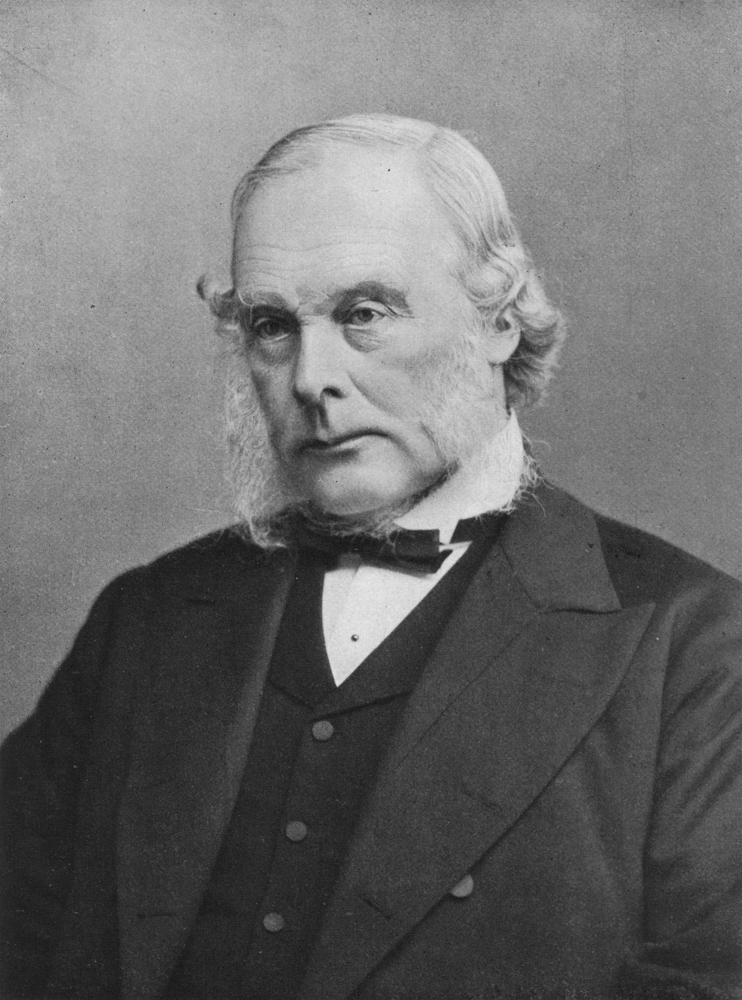
Publication Details
Trans. path. Soc. Lond., 29, 425-67. 1877 CE–1878 CE.
Lister was the first to obtain a pure culture of a bacterium (Bact. lactis). Lister first presented the results of this research in an address to the Royal Society on December 18, 1877. Because of its historic significance the text of the lecture was almost immediately published in Lancet,II, 918-921 in the issue of December 22, 1877. His full report in the Transactions of the Pathological Society of London appeared significantly later, in 1878. In the lecture Lister actually demonstrated before his audience how to obtain a "pure culture" of an organism.
(Thanks to Juan Weiss for this reference and its interpretation.)
"Joseph Lister's goal was to show that a pure culture of Bacterium lactis, normally present in milk, uniquely caused the lactic acid fermentation of milk. To demonstrate this fact he devised a procedure to obtain a pure clonal population of B. lactis, a result that had not previously been achieved for any microorganism. Lister equated the process of fermentation with infectious disease and used this bacterium as a model organism, demonstrating its role in fermentation; from this result he made the inductive inference that infectious diseases of humans are the result of the growth of specific, microscopic, living organisms in the human host.... By demonstrating that a microscopic living entity smaller than a yeast cell could cause fermentation, he was able to argue ‘that other organisms may exist … smaller than the B. lactis’, and not readily visible in diseased human tissues, could be the cause of infectious disease in humans.3 This paper was a landmark for two reasons. It was the first example of the use of a bacterium as a model organism and also for the invention of a procedure, now characterized as the limiting dilution method, for isolating a specific bacterium in a pure form, providing a first case of bacterial cloning.4 (Santer, "Joseph Lister: first use of a bacterium as a 'model organism' to illustrate the cause of infectious disease of humans," Notes and Records of the Royal Society, 64, 2009) .
Browse Tags
Thematic Classifications
| Catalog Metadata | Reference Information |
|---|---|
| Entry Number | #2489 |
| Permanent Link | https://staging.historyofmedicine.com/entry/3115 |
| Author Bio Link | Wikipedia ↗ |
| External URL | on-the-lactic-fermentation-and-its-bearings-on-pathology |
Geographic Context
Mentioned in annotation: London