
Historical Bibliography Updated: June 16, 2026
Enzyme defect associated with a sex-linked human neurological disorder and excessive purine synthesis.
Publication Details
Science, 155, 1682-84. 1967 CE.
Jay Seegmiller and his colleagues at NIH discovered that the rare genetic disease, Lesch–Nyhan syndrome, was due to a profound deficiency of an enzyme known as hypoxanthine guanine phosphoribosyltransferase, or HGPRT. They reported this as "the first example of a relation between a specific enzyme defect and abnormal compulsive behavior and simultaneously as the 1st enzyme defect in purine metabolism demonstrated in a neurological disease."
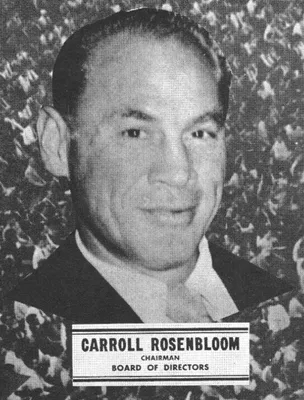
Order of authorship in the original publication: Seegmiller, Rosenbloom, Kelly.
(Thanks to Juan Weiss for this reference and its interpretation.)
Browse Tags
Thematic Classifications
| Catalog Metadata | Reference Information |
|---|---|
| Entry Number | #14198 |
| Permanent Link | https://staging.historyofmedicine.com/entry/16514 |
| Author Bio Link | Wikipedia ↗ |
| External URL | enzyme-defect-associated-with-a-sexlinked-human-neurological-disorder-and-excessive-purine-synthesis |