
Sanitation in Panama.
Publication Details
New York & London: D. Appleton and Company, 1915 CE.
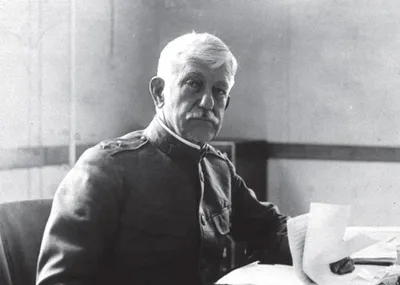
"Gorgas capitalized on the momentous work of ... Walter Reed, who had himself built much of his work on insights of a Cuban doctor, Carlos Finlay, to prove the mosquito transmission of yellow fever. He won international fame battling the illness—then the scourge of tropical and sub-tropical climates—first in Florida, later in Havana, Cuba and finally, in 1904, at the Panama Canal.[6]
As chief sanitary officer on the canal project, Gorgas implemented far-reaching sanitary programs including the draining of ponds and swamps, fumigation, mosquito netting, and public water systems. These measures were instrumental in permitting the construction of the Panama Canal, as they significantly prevented illness due to yellow fever and malaria (which had also been shown to be transmitted by mosquitoes in 1898) among the thousands of workers involved in the building project [7]" (Wikipedia article on William C. Gorgas, accessed 03-2017). Digital facsimile from the Internet Archive at this link.
Browse Tags
Thematic Classifications
| Catalog Metadata | Reference Information |
|---|---|
| Entry Number | #9259 |
| Permanent Link | https://staging.historyofmedicine.com/entry/11441 |
| Author Bio Link | Wikipedia ↗ |
| External URL | sanitation-in-panama |
Geographic Context
Publication place: New York & London
Mentioned in annotation: Havana