
Zoological illustrations, or, original figures and descriptions of new, rare, or interesting animals, selected chiefly from the classes of ornithology, entomology, and conchology, and arranged on the principles of Cuvier and other modern zoologists. 3 vols.
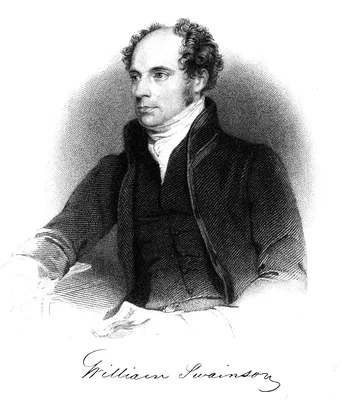
Publication Details
London: Printed by R. and A. Taylor for Baldwin, Cradock, and Joy...., 1820 CE–1823 CE.
"Apart from the common and scientific names of many species, it is for the quality of his illustrations that he [Swainson] is best remembered. His friend William Elford Leach, head of zoology at the British Museum, encouraged him to experiment with lithography for his book Zoological Illustrations (1820–23). Swainson became the first illustrator and naturalist to use lithography, which was a relatively cheap means of reproduction and did not require an engraver. He began publishing many illustrated works, mostly serially. Subscribers received and paid for fascicles, small sections of the books, as they came out, so that the cash flow was constant and could be reinvested in the preparation of subsequent parts. As book orders arrived, the monochrome lithographs were hand-coloured, according to colour reference images, known as ‘pattern plates’, which were produced by Swainson himself. It was his early adoption of this new technology and his natural skill of illustration that in large part led to his fame.[8]" (Wikipedia article on William John Swainson, accessed 03-2017).
Digital facsimile from the Biodiversity Heritage Library at this link.
Browse Tags
Thematic Classifications
| Catalog Metadata | Reference Information |
|---|---|
| Entry Number | #9197 |
| Permanent Link | https://staging.historyofmedicine.com/entry/11378 |
| Author Bio Link | Wikipedia ↗ |
| External URL | zoological-illustrations-or-original-figures-and-descriptions-of-new-rare-or-interesting-animals-selected-chiefly-from-the-classes-of-ornithology-entomology-and-conchology-and-arranged-on-the-principles-of-cuvier-and-other-modern-zoologists- |
Geographic Context
Publication place: London