
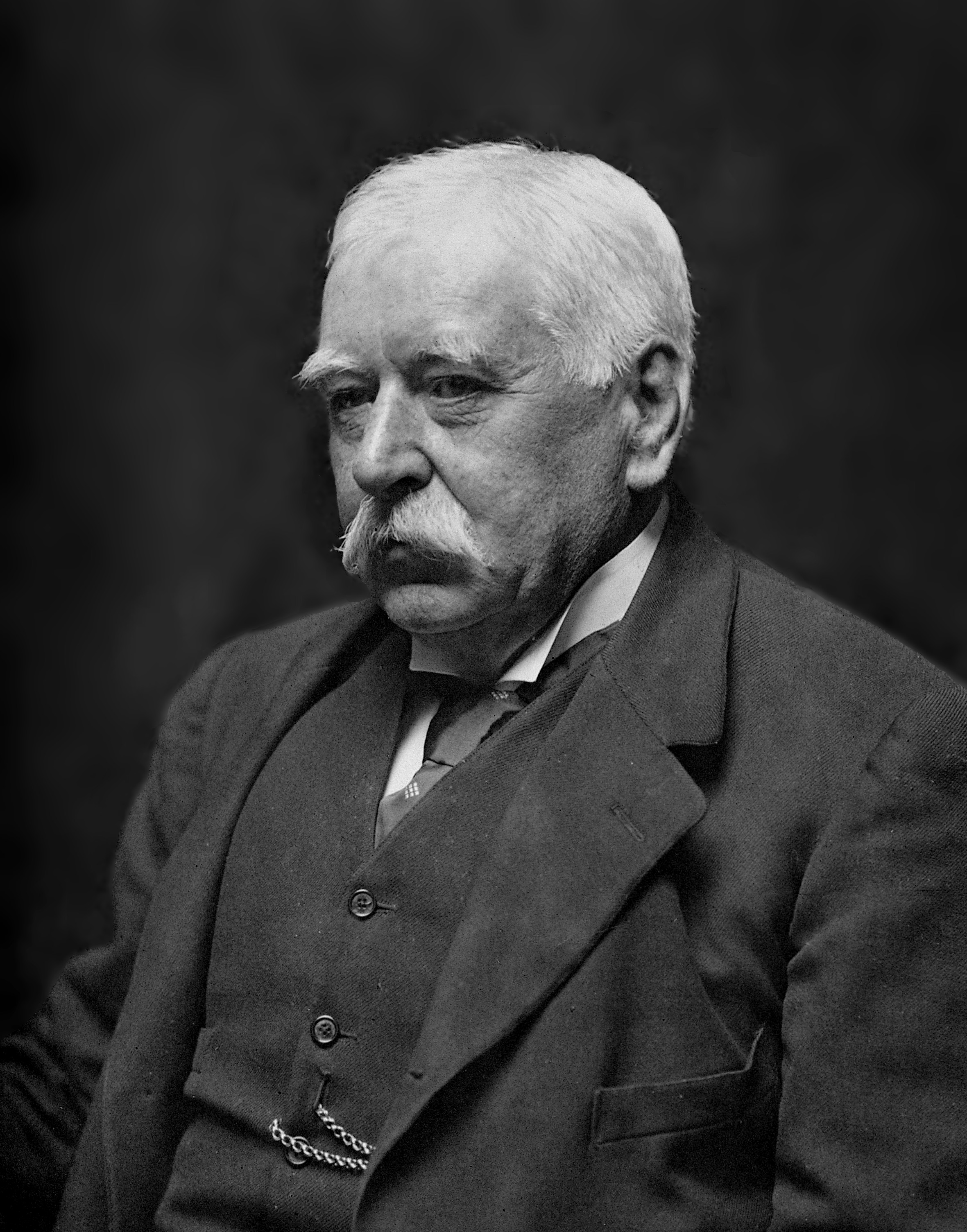
MANSON, Sir Patrick (1844 – 1922)
1844 – 1922
9 entries in the GMN corpus.
Image source Unknown author Unknown author · Wellcome Collection · CC BY 4.0
1877 CE
#5345
Filaria sanguinis hominis.
1877 CE
#5345.1
Further observations on Filaria sanguinis hominis.
Manson showed that Wuchereria bancrofti, the cause of filarial elephantiasis in man, develops in, and is transmitted by, the Culex mosquito. This was the first proof that infective diseases are spread by animal vector…
1879 CE
#11248
Additional notes on filaria sanguinis hominis and filiaria disease.
On p. 36 of this paper Manson first described nocturnal periodicity in Filaria Bancrofti, an adaptation to the nocturnal biting habits of their mosquito vector. (Thanks to Juan Weiss for this reference and its interpr…
1880 CE
#5346.2
Distoma ringeri.
Manson made a fundamental contribution to knowledge on paragonimiasis with his description of its etiology and of the parasite. He named it Distoma ringeri after Dr. Ringer, who recovered it from the lung at necropsy;…
1883 CE
#2455
The Filaria sanguinis hominis and certain new form of parasitic disease in India, China and warm countries.
A collection of several papers written by Manson.
1884 CE
#5346.3
The metamorphosis of Filaria sanguinis hominis in the mosquito.
Manson reported that the changes he had observed in ingested filariae took place in the mosquito thorax, not in the stomach as previously thought.
1894 CE
#5245
On the nature and significance of the crescentic and flagellated bodies in malarial blood.
Manson’s mosquito–malaria hypothesis. See also his Gulstonian Lectures in Lancet, 1896, 1, 695-98, 751-55, 831-33.
1898 CE
#2266
Tropical diseases.
Manson has been called the “father of modern tropical medicine”. He had vast experience of disease in the Tropics and himself made many valuable contributions to the knowledge of this subject. He described…
1900 CE
#5252.2
Experimental proof of the mosquito-malaria theory.
In a classic demonstration Manson allowed infected mosquitoes from Rome to bite a volunteer (his son) in London, who developed malaria 15 days later with tertian parasites in the blood, and who was cured by quinine.